Reading English Picture Books With Children
Read English picture books with children using a relaxed routine: explore pictures, share the story and revisit a few useful words through play.
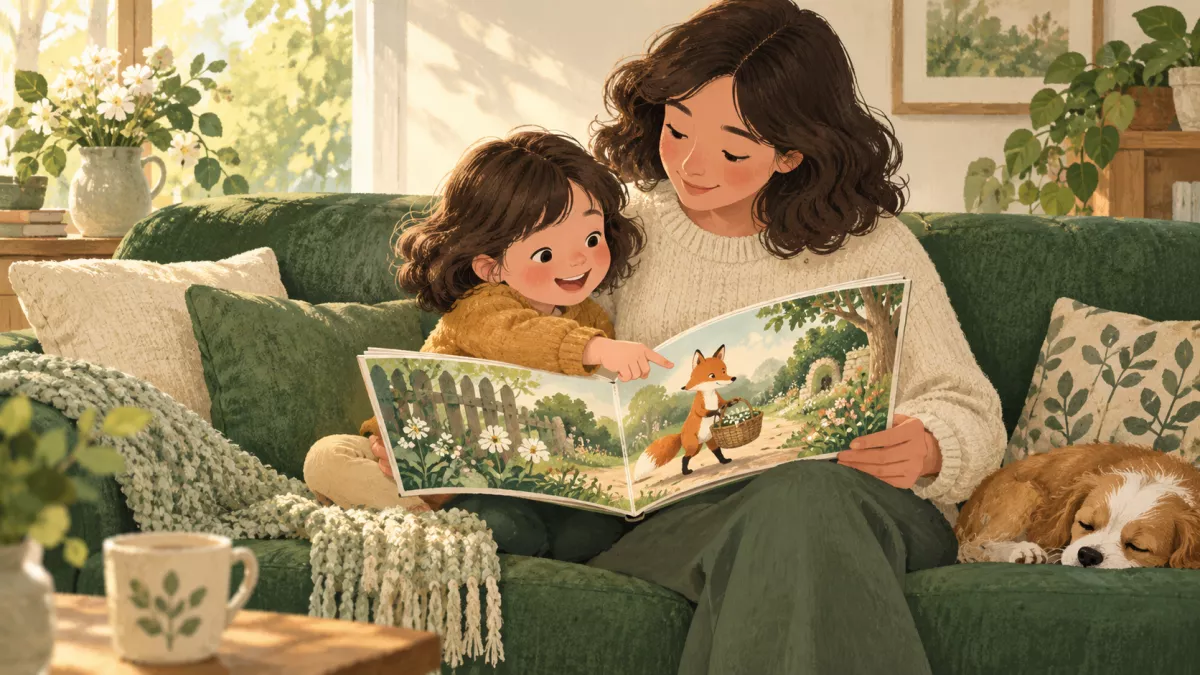
Reading an English picture book together can be a conversation, not a test. A child can notice an animal, point to a detail, repeat a familiar phrase or simply enjoy listening. Choose a book that interests them, share the story and leave room for their response. A short, enjoyable reading can be enough for one sitting.
Choose a manageable book
Look through the pages before you begin. Notice the amount of text, the vocabulary and whether the pictures help explain the story. A book with very little print can still contain unfamiliar language, so use the actual pages as your guide rather than assuming every picture book is easy.
Choose an age-appropriate theme the child likes: animals, journeys, gardens or familiar routines. The guide to choosing a reading level can help you judge whether the language will feel manageable. You can read the words aloud even when the child is not ready to read them independently.
Explore a picture before reading
Begin with one open invitation: “What can you see?” Allow pointing, a single word, a short sentence or a response in the child's first language. You can add a small English model: “Yes, a fox. A little fox with a basket.” There is no need to demand a full sentence for every picture.
Moment | Possible prompt | Possible child response |
|---|---|---|
Notice | What can you see? | A tree, a point or a gesture |
Describe | Is the basket big or small? | Small |
Predict | Where might the fox go? | To a house |
Connect | Have we seen a garden like this? | A personal memory |
Scroll sideways to see all columns.
Use pictures to discuss the story's meaning. When the goal is reading the printed words, help the child attend to the letters and sounds they are learning. Guessing a word from the picture alone is different from decoding its print.
Read the story without stopping at every word
Read a short section with natural expression. Pause at a useful moment, such as a character finding something, rather than interrupting every sentence to ask a question. The child needs a chance to follow the story as a whole.
Choose just a few words to explain. Point to a clear picture, act out an action or give a familiar example. The earlier context-clues lesson shows how surrounding information supports meaning. If the picture and sentence do not make a word clear, give a simple explanation instead of forcing a guess.
If a child wants to hear a favourite page again, reread it. They may join in with a repeated phrase when they feel ready. If attention fades, mark the place and continue another time. Finishing the book in one session is not the only useful outcome.
Turn a few words into a small activity
After reading, choose two or three useful words from the story. If they are basket, tree and run, point to a basket picture, find a tree outside or act out running in place. Keep the activity connected to the story so the words have a memorable setting.
For a child practising letters and early words, Letter Learning offers a separate playful activity you can use alongside reading. Match the activity to what the child can currently do. A letter game supports a particular skill; shared reading also involves understanding characters, events and language.
Revisit the story with a new purpose
On another day, ask the child to choose a favourite picture. They might retell one event, name an object or explain why they like it. You can use the same book at different levels of participation without turning every reread into a harder quiz.
Look at a page together.
Read a short section aloud.
Pause for one useful response.
Explore a few words through pictures or actions.
Return later if the child wants another reading.
For your own English practice, prepare two simple prompts before the session. Say them aloud so they feel comfortable. If you make a language mistake, correct it calmly and continue the story. Warm attention and a clear shared purpose matter more than performing a perfect reading.
Keep a note of the words or pages the child enjoyed. That helps you choose a useful next activity while respecting their interests. The goal is a shared experience where English has meaning, not a page-by-page record of correct answers.
Your turn · self-review
Plan a relaxed shared reading
Write your answer first. Reveal the models, compare the reasons and try a fresh example.
Practice only. Your writing stays on this page; it is not submitted or saved.
-
Model answer and explanation
“Yes, a fox! The fox has a little basket.” You could then pause or ask a simple choice question. Pointing is a useful contribution to the conversation.
-
Model answer and explanation
First explore the picture together. Then read the page aloud and ask what happened. Finally, act out one useful word such as open. Keep decoding printed words distinct from guessing through pictures.