English Clothes Vocabulary: Fabrics, Fit and Patterns
Build English clothes vocabulary for fabrics, patterns and fit. Describe what you wear, ask for another size and practise a simple shopping conversation.
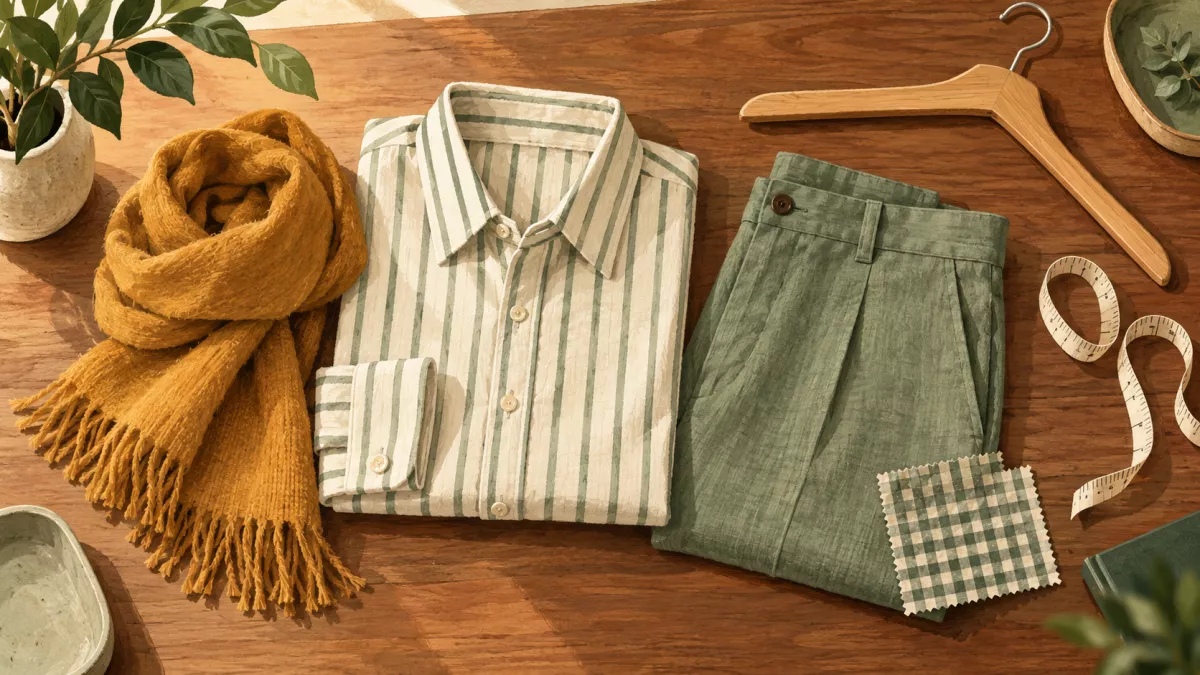
“I want a shirt” starts a shopping conversation. “I’m looking for a plain cotton shirt with long sleeves” gives the assistant much more to work with. English clothes vocabulary becomes useful when you can combine the item with its material, pattern and fit.
You do not need a huge wardrobe list to begin. Choose a few garments you actually wear, learn their important features and practise explaining one thing you would change. This guide gives you language for that description and a short conversation.
Name the item and a useful detail
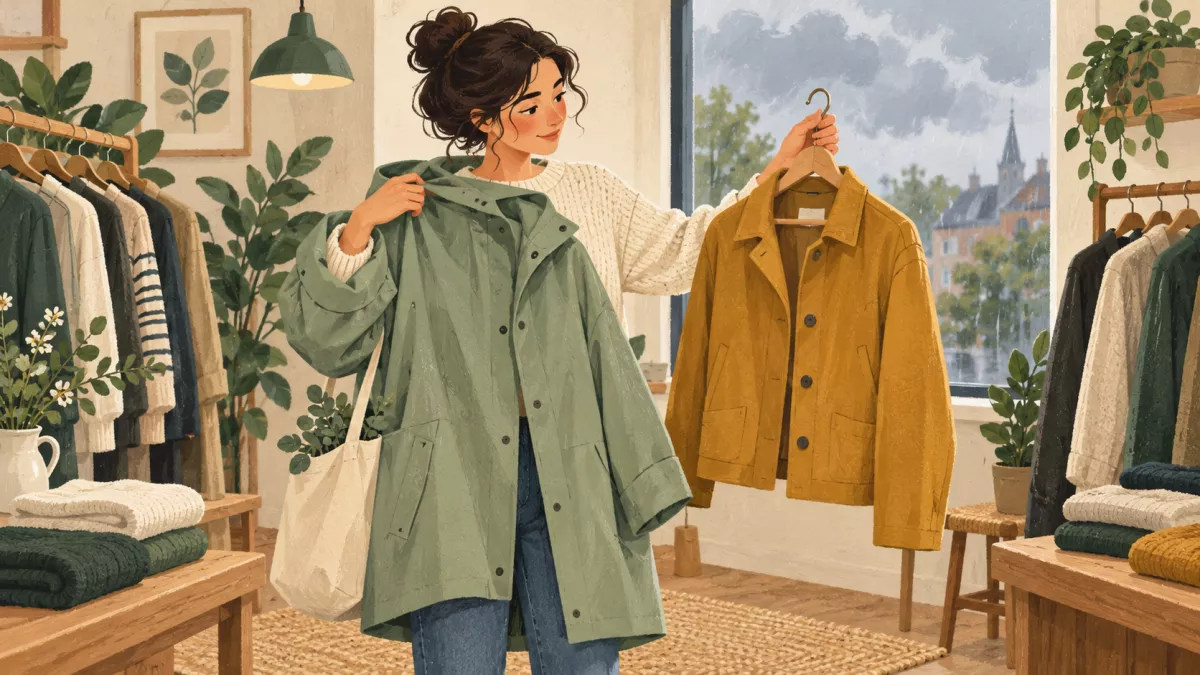
Common items include a shirt, a T-shirt, a jacket, a coat, a skirt and a scarf. Add a feature such as long sleeves, short sleeves, a collar, a hood or pockets. “A jacket with a hood” is a natural description when you do not know a more specific garment name.
Clothes is plural: “My clothes are in the bag.” Clothing is normally uncountable: “This shop sells outdoor clothing.” For trousers, jeans and shorts, use a pair when you need to count one item: “I bought a pair of jeans.” Say “These jeans are comfortable” or “This pair is comfortable.”
Some everyday words vary between regions. Trousers is common in British English; pants often means trousers in American English, while pants can mean underwear in British English. Use the word your listener understands, and add a description if there is any doubt.
Describe fabrics without guessing
Word | Useful phrase | Example |
|---|---|---|
cotton | a cotton shirt | Is this shirt made of cotton? |
wool | a wool scarf | I’m looking for a wool scarf. |
linen | linen trousers | These linen trousers have pockets. |
denim | a denim jacket | She wore a blue denim jacket. |
striped | a striped top | The stripes are green and cream. |
checked | a checked shirt | I prefer the small checked pattern. |
plain | a plain skirt | I’d like a plain skirt without a pattern. |
Scroll sideways to see all columns.
Material words often go before the item: a cotton shirt, a leather belt. You can also say made of cotton. A pattern is a different feature: plain means without a pattern, striped describes stripes, and checked describes a pattern of squares. Floral describes a flower pattern.
Do not assume the material from the appearance alone. If it matters, ask “What is it made of?” and check the label. A soft garment is not necessarily wool, and a shiny fabric is not necessarily silk.
Explain the fit and how it feels
Fit concerns size and shape: “The jacket fits me” means its size and shape work for your body. Suit concerns whether something looks good or is appropriate: “That colour suits you.” A jacket can fit well even if you do not like its colour.
Useful fit words include tight, loose, fitted and oversized. Tight can describe a problem, while fitted often describes a garment designed to follow the body’s shape. Oversized can describe an intentional style rather than the wrong size. Explain your preference instead of assuming everyone wants the same fit.
Use too and enough to make a problem specific: “The sleeves are too long” or “The waist isn’t loose enough.” Comfortable and uncomfortable describe how something feels. The prefix un- changes comfortable to its opposite; explore more patterns in English prefixes once this pair is familiar.
Practise a complete shop conversation
Customer: “Could I try this jacket in a larger size?” Assistant: “Of course. What seems to be the problem with this one?” Customer: “It fits across the shoulders, but the sleeves feel too tight.” Assistant: “Would you like to try a different style as well?”
The customer names a specific problem rather than simply saying bad. You can change the exchange to practise length, pattern or material: “Do you have this in a plain fabric?” Add the questions from shopping in English when you want to ask about price, payment or returns.
Turn a wardrobe description into active vocabulary
Choose three items you own or use three clothing pictures.
Describe each with an item name and one clear feature.
Add a sentence about fit or comfort.
Ask a partner one shopping question about an item, then answer in a full sentence.
A useful description might be: “This is a green cotton shirt with short sleeves. It fits well, but I would prefer larger pockets.” The details work together to explain a real preference. On a later day, describe the same item without looking at your notes and replace one detail to create a new example.
Your turn · self-review
Describe a garment and a shopping need
Write your answer first. Reveal the models, compare the reasons and try a fresh example.
Practice only. Your writing stays on this page; it is not submitted or saved.
-
Model answer and explanation
These jeans are too tight. This pair of jeans is too tight. Jeans takes plural agreement, while the singular noun pair takes is.
-
Model answer and explanation
This shirt fits well. Do you have a plain one in the same size? The request distinguishes fit from pattern and gives the assistant a clear next step.