
Letter Learning: English Letters and Words for Children
Help a child practise English letters and first words with Letter Learning, using short shared sessions, picture talk and playful practice away from the screen.
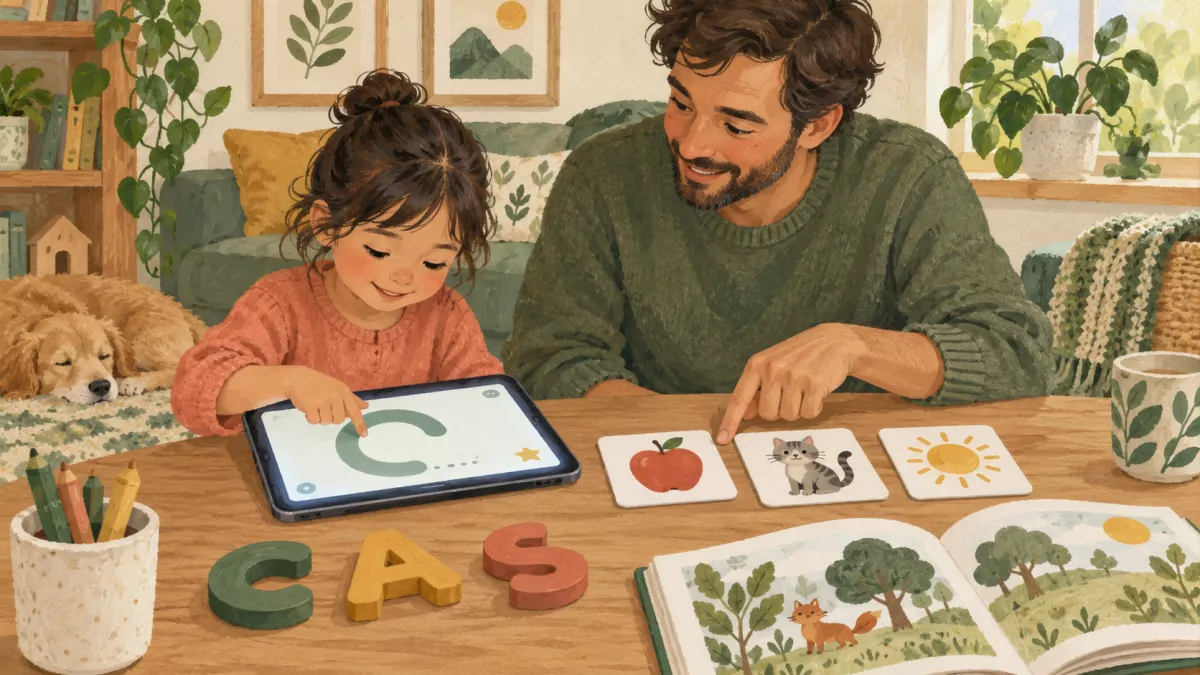
Help a child use Letter Learning by sitting beside them, choosing one small goal and connecting the game to real objects and spoken words. The game offers tracing, picture matching and first-word activities. A few attentive minutes can give you plenty to talk about together.
Choose one goal for today
Before opening Letter Learning, decide what you want to notice. Perhaps your child is beginning to recognise a letter shape, match a familiar picture to a word, or put letters together. Choose one goal rather than expecting every part of the game to be completed in a single sitting.
Ask what the child already knows. Show a book or a cup and say its English name naturally. If they use another language to explain the picture, acknowledge the idea and offer the English word. Understanding the object gives the new word a place to attach.
Explore beside the child
Open the game and look at the available activities together. Let the child notice pictures, letters and controls before starting.
Model one turn slowly. Say what you are looking at and demonstrate the action without taking over every choice.
Give the child time to respond. If they hesitate, offer a small clue or repeat the word rather than immediately supplying every answer.
Stop at a comfortable point. You can return to the same material another day.
Choose an activity together and let the child explore at a comfortable pace. If dragging or tracing feels difficult, help with the movement and keep the language goal small.
Use the activities to start a conversation
Activity | What you can say | What to notice |
|---|---|---|
Tracing a letter | “Let’s follow the shape slowly.” | Does the child recognise the shape again? |
Matching a picture | “What can you see? Can you find the same thing?” | Can the child connect the picture and the word? |
Building a word | “Let’s look at the letters in order.” | Which part can the child do with less help? |
Scroll sideways to see all columns.
Letter names and sounds are related, but they are not identical. The name of the letter B is “bee”; its common sound in “bag” is different. Keep your explanation tied to the word being practised. English letters can represent different sounds, so avoid promising that one sound rule works for every word.
Give specific, useful feedback
Instead of saying only “Good job”, describe the successful action: “You found the same letter again” or “You put that letter in the right place”. If the answer is wrong, return to the picture or model and try again together.
A mistake can tell you what support is needed. The child may know the word but find the screen control unfamiliar. They may recognise the picture but not remember its English name. A game score alone cannot tell you which of these happened.
Your turn · self-review
Plan a shared learning turn
Write a response you could use, then compare it with the model.
Practice only. Your writing stays on this page; it is not submitted or saved.
-
Model answer and explanation
“Let’s look again. A cup is something we drink from. Here is our cup on the table. Can you find the picture that matches it?”
-
Model answer and explanation
“Today we will notice the first letter in your name and look for the same shape in one or two other places.” Adjust the goal to what the child can already do.
Move the words away from the screen
After playing, find one or two objects from the activity in your home or draw them together. Say a short phrase such as “a red bag” or “my book”. The child can point, name, draw or act; an answer does not always need to be a full sentence.
Return to familiar words later with simple spaced repetition. Keep it playful: ask where the book is while tidying, or name a toy during a story. These natural returns help you see whether the word is becoming familiar beyond the game.
Build a routine that fits your family
Choose a time when you can give the child attention and finish before frustration takes over. Some days you may play, and other days you may read a picture book or look for objects together. Learning English at home offers broader routine ideas.
If you also use question-based activities, choosing an English game deck can help you match the material to your goal. Let curiosity and shared conversation guide the session, then note one small thing to revisit next time.





