How to Combine an English Game With a Speaking Activity
Combine an English game with a short speaking activity. Choose useful target language, play a few rounds and help learners reuse it in a real exchange.

To combine an English game with speaking practice, choose a small language goal and plan a conversation that uses it. Play a few rounds to bring the words or sentence patterns to mind, then pause the game and give learners a reason to say something of their own.
Start with a speaking outcome
Choose an outcome you can hear: ask a follow-up question, describe an object or make a simple invitation. “Practise English” is too broad to help you choose the game or the follow-up task.
For example, if the goal is asking about weekend plans, you might practise time expressions and familiar activities in the game. The speaking task could then be a short conversation about an imaginary Saturday. Players can use real plans if they prefer, but nobody needs to share personal information.
Choose two or three useful phrases before you start. For this example: “What are you doing on Saturday?”, “That sounds fun” and “Who are you going with?” Keep them visible for the first speaking round.
Choose a game that supports the task
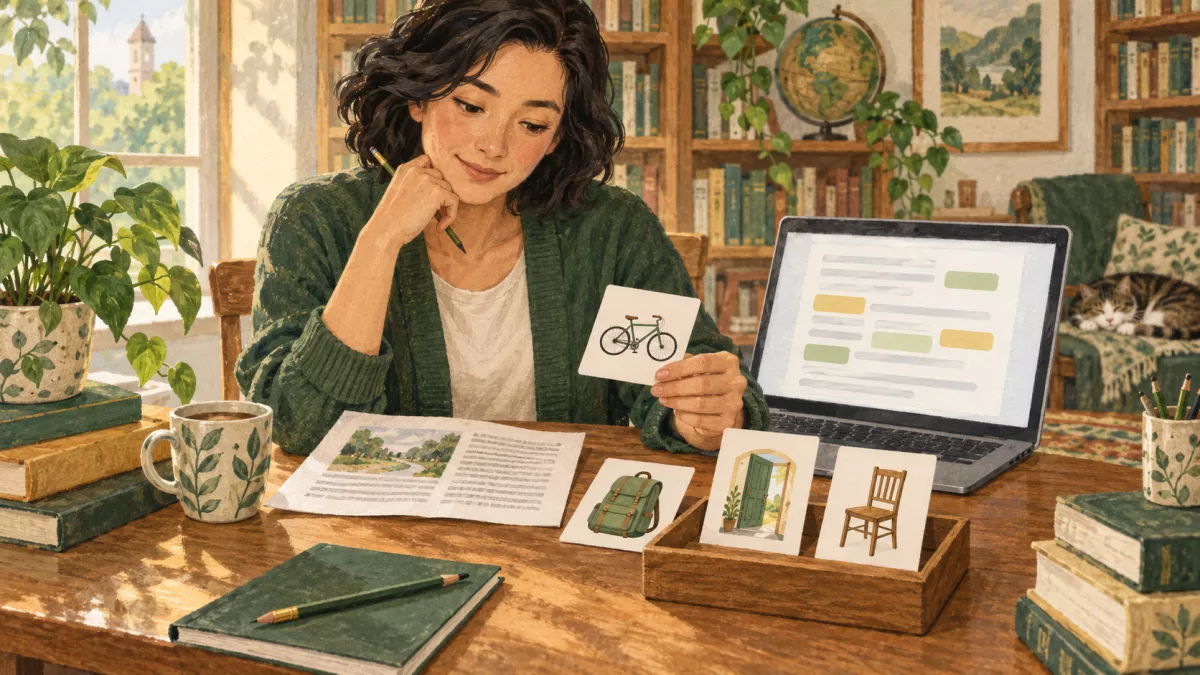
Browse Game Decks for a suitable topic and check the cards before the session. Look at the prompt, answer and difficulty rather than relying only on the deck title or level label. The language should leave learners enough attention for the conversation afterward.
For a shared-screen activity, Classroom Quiz is one option. Use a compatible deck and follow the game’s controls. The team quiz guide explains that setup. Your speaking activity is a separate addition that you lead around the game.
Language in the game | Speaking activity afterward |
|---|---|
Food words | Ask a partner about a meal they would like to make. |
Places in town | Describe an imaginary neighbourhood and ask one question. |
Daily activities | Compare two invented routines. |
Feelings | Describe a fictional situation and suggest how someone might feel. |
Scroll sideways to see all columns.
Use a short play, pause, speak cycle
Explain the speaking goal and model a brief exchange with one learner.
Play a small number of questions, such as three or four, so the topic stays clear.
Pause and give everyone a moment to choose a word or phrase they want to reuse.
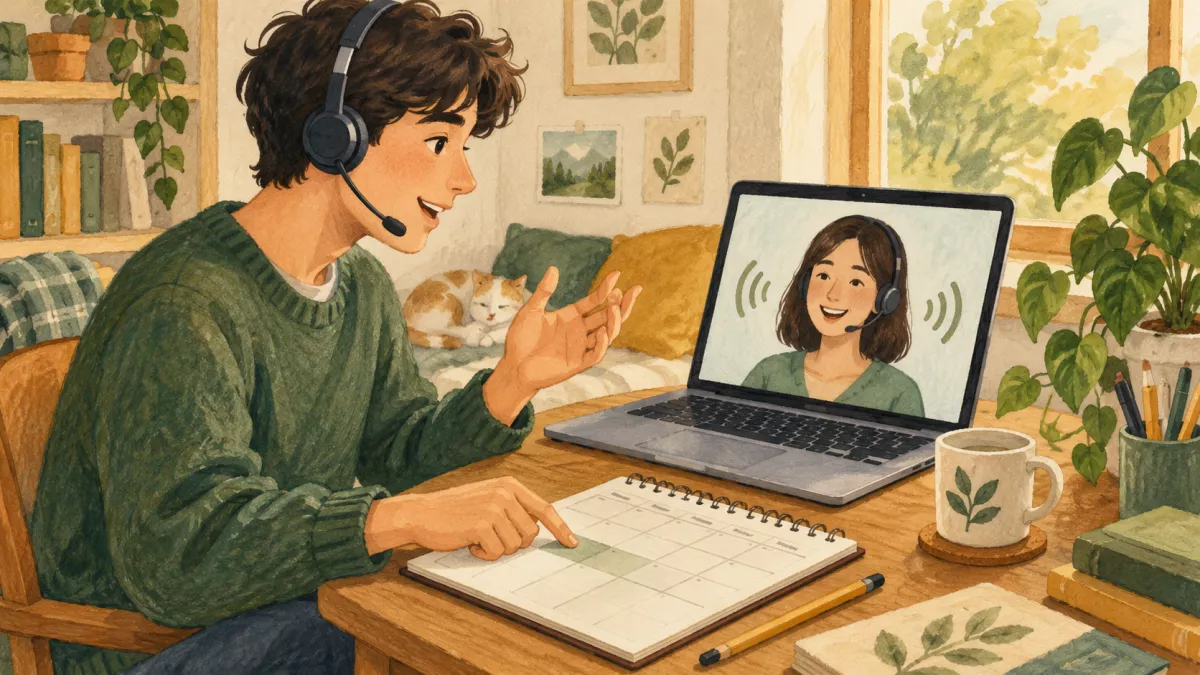
Put learners in pairs and give each person a speaking and a listening task.
Return to the game or repeat the conversation with a new partner.
The pause matters because choosing an answer on screen and forming a response in a conversation are different activities. Keep the transition simple: “Use one activity from those questions. Ask your partner about Saturday, then ask one more question.”
A listener needs a job too. Asking a follow-up question is more useful than waiting silently for a turn. The lesson on keeping an English conversation going gives several ways to respond.
Model a small exchange
A model can be short: “What are you doing on Saturday?” “I’m meeting a friend at the park.” “That sounds nice. What time are you meeting?” “At eleven.” The second question shows interest and gives the first speaker a reason to continue.
Ask learners to change one detail when they try it. They can choose a different activity, place or time. Later, remove one support phrase or invite a longer answer if the group is ready.
Your turn · self-review
Plan the speaking step
Design the conversation before you start another game round. Compare your choices with these models.
Practice only. Your writing stays on this page; it is not submitted or saved.
-
Model answer and explanation
Ask your partner what they would like to cook for dinner. Listen to the answer, then ask which ingredients they need.
-
Model answer and explanation
Who are you going with? Other relevant questions include “When are you going?” or “What will you do there?”
Give feedback that helps the next turn
Listen for the goal you chose. Did each person ask a follow-up question? Could the partner understand the answer? Notice a successful phrase, then choose one useful point to practise again.
If a learner says “What time you meet?”, you can model “What time are you meeting?” after the exchange and let them try the question again. Avoid interrupting every sentence when the main goal is keeping the conversation moving.
The quiz score tells you about the game round. It does not measure the whole speaking exchange or establish a learner’s English level. Your observations can guide the next activity without turning the conversation into another test.
Adapt the activity to your group
At home, two people can take turns asking and answering, or an adult can model a response with a child. The family English games guide offers more small-group ideas. In a larger class, pairs give more people a chance to speak than one long whole-group exchange.
Finish by asking learners to reuse one phrase in a new example. Small-talk phrases can supply an opening for another session. A short game followed by a purposeful exchange gives the language somewhere useful to go.