
How to Use a Reading Pacer for English Practice
Use an English reading pacer at a comfortable speed, check what you understand and practise with an original passage plus explained comprehension answers.
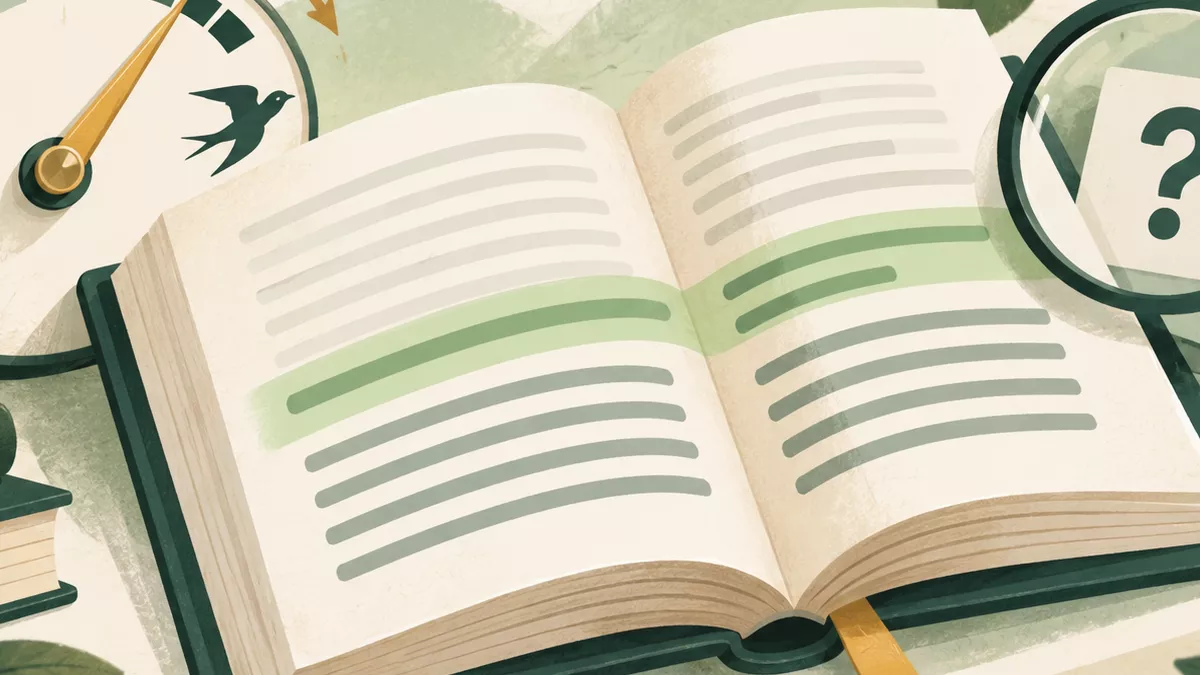
An English reading pacer moves a passage forward at a chosen speed by making words disappear over time. Use it to practise keeping your attention on the message. Choose a comfortable pace, read the passage and check what you understood before deciding whether to go faster.
English Study Kit’s Reading Pacer includes an adjustable words-per-minute setting, reading controls and questions for its sample and random passages. This guide shows how to use those features carefully, including what changes when you enter your own text.
Understand what the pace means
Open the Reading Pacer. The passage appears with a word count, an estimated reading time and a pace shown as WPM. WPM means words per minute. It controls how quickly the text disappears, rather than measuring your understanding.
A setting of 120 WPM means the pacer schedules about two words per second. This is an explanation of the control, not a recommended target for every learner. A familiar story may be easier to follow than a short paragraph full of new language.
Start with a pace that lets you hold the meaning in your mind. If you feel pressured to watch the fading words instead of understanding them, lower the setting for your next attempt.
Choose your passage and start
Begin with the supplied sample, or choose Random to load another available practice passage.
Before reading, adjust the WPM slider or the plus and minus controls. Read the estimated time so you know roughly how long the run will take.
Select Start Reading. Read forward as the words disappear, paying attention to who or what the passage is about.
Use Pause Reading when you need to stop, and Resume Reading to continue the same run.
Use Restart to return to the beginning. To change the pace during practice, restart first and adjust the setting while the pacer is ready; you can also adjust it after a completed run.
After reading, check the meaning before beginning another attempt.
Pausing gives you a break; it does not create a new reading speed. The pace controls are available before a run or after completion, so restarting is useful when you want a slower fresh attempt.
Use the comprehension questions
The sample and random practice passages have a Quick comprehension check. Choose an answer and select Check answer. Read the feedback, then use the question navigation to move through the available questions.
A question about the main idea asks what the writer is mainly saying. A detail question asks for a specific piece of information. If you remember isolated words but cannot answer either kind, try reading more slowly or choose a simpler passage.
After reading | What to do next | Why it helps |
|---|---|---|
You can explain the main idea and details. | Try a slightly higher pace next time. | You are checking understanding before increasing difficulty. |
You know the topic but miss key details. | Repeat at the same pace or lower it. | The next attempt has a specific target. |
Many words are unfamiliar. | Choose an easier text and study a few useful words. | Vocabulary can be the obstacle, even at a slow pace. |
You watched the fading text but lost the message. | Restart at a comfortable pace. | Meaning needs your attention as well as eye movement. |
Scroll sideways to see all columns.
Add your own text carefully
Select Edit to enter a passage, then save it. The editor needs at least five words. Choose a short paragraph you understand reasonably well and keep its line breaks readable. You can use the original passage below for a first attempt.
The tool does not automatically create comprehension questions for your own edited text. The built-in questions belong to the supplied practice passages. Use the questions in this article for the example below, or prepare your own questions for another text.
Nora usually buys her vegetables at the market on Saturday. This week, she went on Friday because she was visiting her sister the next day. She took a shopping list, but the tomatoes were more expensive than she expected. Instead, she bought carrots and a small bag of potatoes. Before leaving, she asked the seller whether the tomatoes might be cheaper next week. At home, Nora made soup with the vegetables and put some in a container for her sister.
Check your understanding of Nora’s story
Copy the passage into the editor if you want to practise with it. Read at a comfortable setting, then look away from the story and answer these questions in a notebook. Check your answers afterwards.
Your turn · self-review
Write, then compare
Answer in your own words, then compare the meaning and evidence with the models. Other clear answers may also be correct.
Practice only. Your writing stays on this page; it is not submitted or saved.
-
Model answer and explanation
A changed shopping trip. The day and purchases changed.
-
Model answer and explanation
She was visiting her sister the next day. Friday was different from her usual Saturday trip.
-
Model answer and explanation
Carrots and a small bag of potatoes. Tomatoes were expensive.
-
Model answer and explanation
She put some soup in a container for her sister.
The story does not say that Nora bought tomatoes or that prices definitely fell the following week. Her question to the seller expresses a possibility. Separating what the text says from what you guess is part of good comprehension.
Record pace and understanding together
Keep a simple note: passage, WPM, main idea and missed detail. For example: “Nora’s market trip, 100 WPM, understood the changed day, forgot the potatoes.” These are sample notes, not a target or a benchmark.
On a second attempt, focus on the forgotten detail. If you can answer the questions at a slightly higher pace, make a note of that too. A familiar passage will usually feel easier after repetition, so use a fresh passage occasionally to check how you manage new information.
Choose one useful next step
For today, complete one reading run and one comprehension check. If sentence meaning is difficult, continue with the reading learning path. If unfamiliar words interrupt you, collect a few practical examples on the vocabulary learning path before your next run.
The most useful setting is the one that lets you follow the writer’s message. Keep that message in view when deciding whether your next attempt should be faster, slower or simply clearer.





