
Skimming vs Scanning: Two Ways to Read English Texts
Learn the difference between skimming and scanning in English, when to use each reading skill and how to check details with a short practice notice.
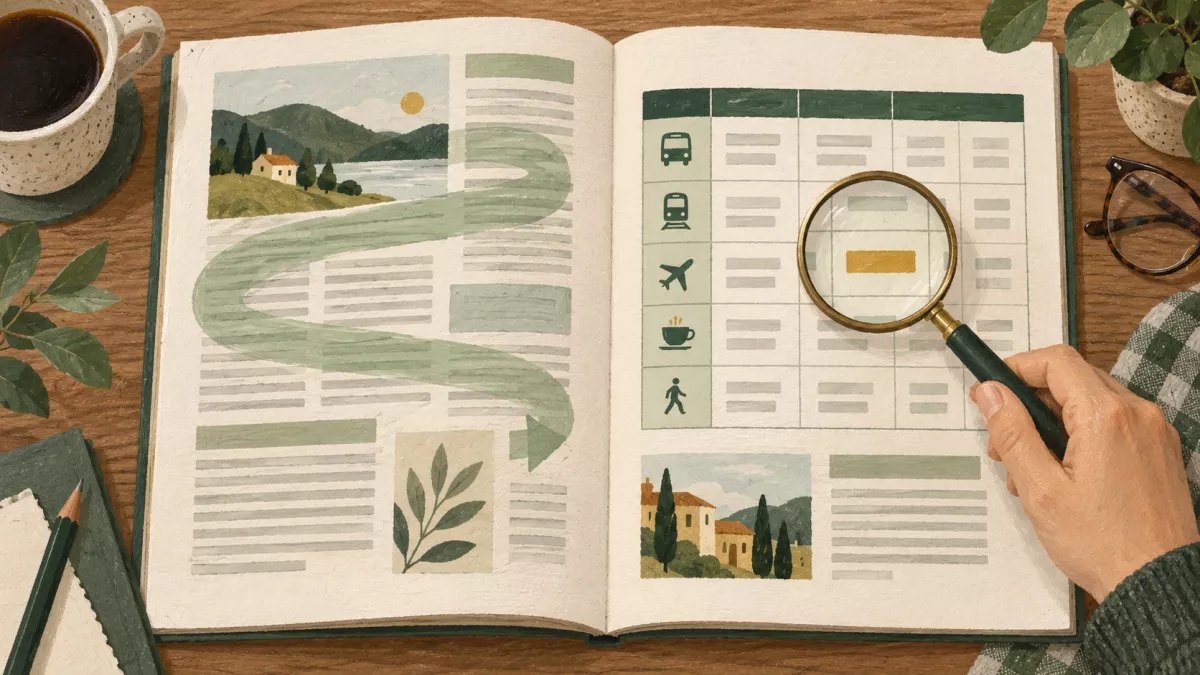
Skimming means reading quickly to understand the general message. Scanning means looking through a text for a particular detail, such as a date, name or price. Both help you choose where to focus, but you may still need to read a section carefully before you use the information.
Think about a community notice. You might skim it to decide whether the event interests you, then scan it for the starting time. Your reading purpose changes, so the way you move through the text changes too.
Skim to find the overall message
Look at the title, headings, pictures and the opening or closing sentences of sections. Move through the text for its main ideas without stopping for every unfamiliar word. Ask: What is this about? What is the writer trying to tell me? A short answer in your own words is a better check than simply reaching the end quickly.
Do not assume that the first sentence always contains a paragraph's main point. It is a useful place to look, but some writers introduce an example first. If the message remains unclear, read more. Our broader reading comprehension guide explains how to connect ideas.
Scan with a specific target
Before scanning, decide what kind of information you need. For “How much does it cost?”, look for a price, currency symbol or phrase such as “entry fee”. For “Who is organising it?”, look for a name or organisation. Your target might be expressed with different words from your question.
Once you find a likely detail, read the surrounding sentence. “Free for children under five” does not mean the event is free for everyone. Scanning locates information; checking the conditions makes the information usable.
Purpose | Start with | Then check |
|---|---|---|
Decide whether an article is relevant | Skimming for its main subject | Does the text address your question? |
Find a departure time | Scanning for the service and time | Is it the correct day and direction? |
Understand an explanation | A quick overview, then careful reading | How do the reasons and examples connect? |
Scroll sideways to see all columns.
Use both skills on one notice
Read this original notice: “Riverside Book Swap. Bring a book and discover something new on Saturday 18 May at Riverside Hall. Doors open at 10:00 and the swap begins at 10:30. Entry is free, but please bring at least one book in good condition. Children's books are welcome. The hall cafe closes at 12:00; the swap continues until 13:00. Contact Leena at the library for questions.”
A skim gives the central message: a community event where people exchange books. Scanning for the date gives Saturday 18 May. Scanning for the end time needs care because there are two closing times: the cafe closes at noon, while the swap ends at 13:00.
Practise changing your reading purpose
Your turn · self-review
One notice, two reading tasks
Use the book-swap notice above. Try your answer before revealing the model.
Practice only. Your writing stays on this page; it is not submitted or saved.
-
Model answer and explanation
The notice invites people to bring books to a free community book swap at Riverside Hall. This captures the purpose rather than copying every detail.
-
Model answer and explanation
The swap begins at 10:30 and ends at 13:00. Bring at least one book in good condition. The 10:00 door-opening time and 12:00 cafe closing time are different details.
Avoid turning practice into a speed contest
Choose a manageable text first. The reading-material selection guide can help you find one. Set a question, try the appropriate reading approach and explain how you found the answer. You can time yourself if useful, but accuracy and understanding come first.
For news articles, headlines may suggest a topic without explaining the full story. Use the English news reading guide to add context and check claims. The British Council's explanations of skimming and scanning also describe these different purposes.
At the end of a session, name what you needed and how you looked for it. “I skimmed for the topic, scanned for the price and read the conditions carefully” is a useful description of successful reading.





