
How to Practise English Conversations With Mia
Practise English conversations with Mia using everyday scenarios, typed or spoken replies, useful follow-up questions and a simple review routine.
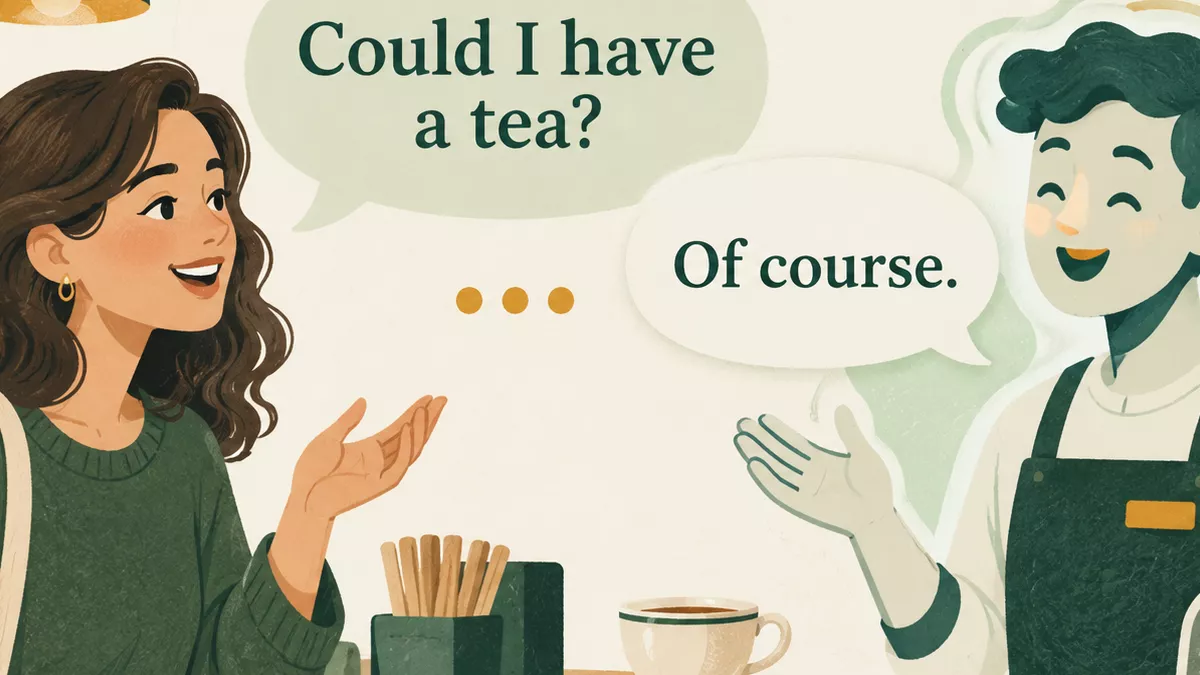
AI English conversation practice works best when you give yourself a small, clear task: introduce yourself, order a drink or borrow a book. With Mia, English Study Kit’s conversation partner, you can practise a chosen situation, respond at your own pace and review useful language afterwards.
This guide shows you how to use the conversation workspace and turn a short exchange into a lesson. The sample replies below are original practice suggestions. Mia’s replies can vary, so listen to the question you actually receive rather than expecting a fixed script.
Choose a situation you can use
Open AI Conversations and choose a scenario from the catalogue. Read the description and the conversation goals before starting. A café scenario gives you a customer’s role; a library scenario asks you to speak to a librarian. Keep your replies connected to that setting.
Start with one familiar situation. You do not need a long speech or advanced vocabulary. A useful first goal is to make one request, ask one question and close the conversation politely.
Scenario | Your first useful reply | What to practise next |
|---|---|---|
Ordering at a Café | Could I have a tea, please? | Ask about the size or an ingredient. |
Borrowing a Library Book | Do you have any short stories? | Ask how long you can keep the book. |
A first introduction | Hi, I’m Sam. I’m learning English. | Add an interest and ask a question back. |
Scroll sideways to see all columns.
Use a made-up name and invented personal details for role-play. The language practice does not require your real address, phone number or other private information.
Start a conversation with the right settings
Log in when the page asks you to do so. Starting and sending conversation turns require an account.
Before starting, open the settings if you want to choose a learner level and practice focus. Beginner, Intermediate and Advanced are available levels; the focus options include Natural conversation, Grammar, Vocabulary and Fluency.
Select Start conversation. Read Mia’s opening message and check the goals for your chosen scenario.
Write a short relevant reply, or use the microphone when speech input is supported on your device. Stop speaking, review the recognised words and correct any recognition mistakes before selecting Send.
Read or listen to the next reply. Use Replay on a message when you want to hear it again. Automatic voice replies can also be switched on or off.
Choose the learner level for this practice session, rather than treating it as a formal assessment of your English. Level and focus are chosen before a session begins. If you want a different setup, use a new practice session instead of trying to change an active conversation.
Use suggestions as a starting point
The workspace can offer suggested replies. Choose a suggestion when you need support, then read it and adapt it before sending. Replacing one detail helps you connect the sentence with your own meaning: “Could I have a small coffee?” can become “Could I have a tea, please?”
Try saying the sentence aloud before you send it. Even when you type, this gives you a chance to practise speaking. Then add something relevant instead of copying several suggestions without thinking about them.
A useful reply usually does two things: answers the current question and gives the other person something to respond to.
Build a café exchange one turn at a time
Your turn · self-review
Your café replies
Imagine the café prompts below. Write a short reply and say it aloud before comparing with a model. These are possible learner replies, not a promised sequence of Mia’s messages; this practice block does not start an AI conversation.
Practice only. Your writing stays on this page; it is not submitted or saved.
-
Model answer and explanation
“Could I have a tea, please?” makes a polite request. “I’d like a tea, please” is another clear option. Answer the question you receive rather than copying a fixed script.
-
Model answer and explanation
“A small one, please.” Here, one refers to the drink already mentioned. You can also say “A small tea, please.”
-
Model answer and explanation
“Do you have any sandwiches?” adds a relevant question and gives your partner something to respond to. Do you have is useful for asking about availability.
-
Model answer and explanation
“That’s everything, thank you.” signals that your order is complete. Other polite endings, such as “That’s all, thanks”, can also work.
-
Model answer and explanation
“Could you say that again?” is a polite request for repetition. “Could you repeat that, please?” is also possible. Asking for help is part of successful communication.
Notice the different purposes. The first sentence makes a request. The second answers a detail question. The third adds a related question. You are practising interaction, rather than putting every sentence you know into one message.
Review one thing before you practise again
The goals panel helps you see the tasks in the scenario and the recorded progress. A coaching note may appear beside a reply. Read it in context: what were you trying to say, and how does the suggested change help? Choose one correction or phrase to practise.
After the exchange, write down three items: a sentence you used successfully, a phrase you needed help with and one question to try next time. For example: “Could I have…?”, “How long can I keep it?” and “Do you have a smaller size?”
Say each item again without looking. Then change one detail. “Could I have a tea?” becomes “Could I have a glass of water?” This checks whether you can use the pattern beyond the original conversation.
A ten-minute practice routine
Minutes 1–2: choose a scenario and read its goals. Prepare two useful words, without writing a full script.
Minutes 3–7: exchange short replies. Include at least one question of your own.
Minutes 8–9: review one phrase or coaching note. Make a new sentence with it.
Minute 10: repeat your best sentence aloud and decide what you want to practise next.
At the end of a completed session, Practice Again lets you revisit the situation. Try a Different Conversation opens another choice. Repeat a familiar scenario with a different order, interest or request so you make fresh decisions.
Your next conversation
Choose a scenario today and aim to complete one clear task. If forming the sentences feels difficult, use the speaking learning path for structured practice, or revisit a pattern on the grammar learning path. Then return to the conversation and use that pattern in a reply.





